Payment Pathways That Link Game Variety to Built-in Control Tools in Portable Apps

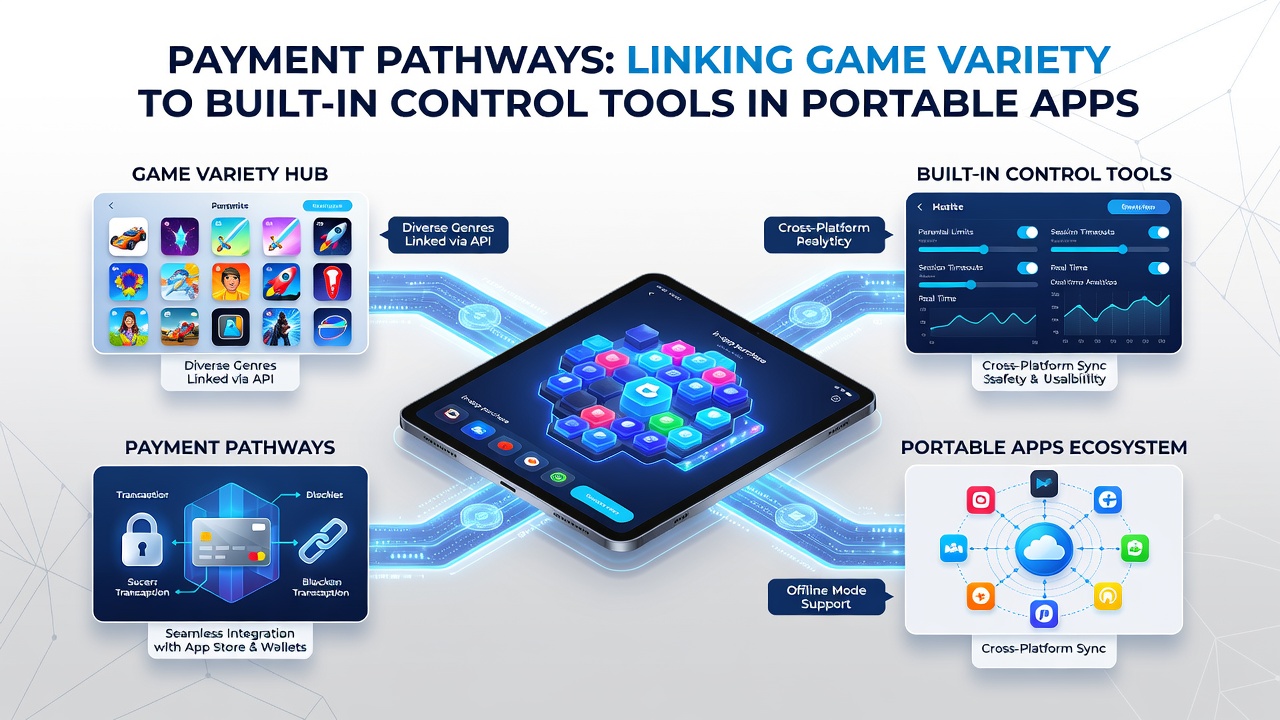
Payment pathways in portable apps create direct connections between game variety and built-in control tools, allowing users to move from slots, table games, live dealer options, and sports betting into deposit limits, session timers, and self-exclusion features without leaving the platform. These systems operate through integrated APIs that route transactions while triggering real-time checks against user-set boundaries, and data from multiple regions shows this linkage improves adherence to responsible play settings.
Core Mechanics of Integrated Payment and Control Systems
Portable apps embed payment gateways that communicate directly with control modules so every deposit or withdrawal attempt runs through verification layers before funds reach the game servers. When a user selects a slot title or joins a live dealer table, the pathway logs the transaction and cross-references it against preconfigured spend caps or time limits, pausing activity if thresholds near violation. Observers note that this architecture reduces friction for players who want quick access yet maintains safeguards across different game types without separate logins or external redirects.
Research from the Australian Institute of Family Studies indicates that apps using unified payment and control layers report higher rates of voluntary limit adjustments compared with fragmented systems. The same study tracked user behavior across several hundred thousand sessions and found that seamless routing between game selection and control panels correlates with fewer instances of extended play beyond intended durations.
Game Variety Supported by Unified Pathways
Modern portable apps host wide selections that include video slots with progressive jackpots, classic table games such as blackjack and roulette, live dealer streams, and sports betting markets, all served through the same payment infrastructure. Each category routes transactions through identical control checkpoints, so a player switching from slots to a live sports wager encounters the same deposit limit enforcement and session timer prompts. This consistency matters because users often move between game types within single sessions, and the shared pathway prevents control settings from resetting during transitions.
Examples from Different Markets
In Canada, provincial regulators require operators to link payment processing with mandatory loss-limit tools that apply uniformly across all game verticals. Similar requirements appear in several Australian states where digital wallets must interface with harm-minimization features before any game loads. These rules ensure that whether a player funds a slot spin or places a sports bet, the control layer activates identically.
Built-in Control Tools Activated Through Payment Routes
Control tools such as deposit caps, cool-off periods, and reality checks activate at the payment stage rather than after game launch. When a transaction processes, the app queries the user's profile for active limits and either completes the transfer or surfaces an alert with options to adjust settings. This timing keeps interventions proactive, and data collected by the National Council on Problem Gambling in the United States shows that front-loaded controls reduce the need for later reactive measures.
July 2026 updates to several European licensing frameworks further standardized these linkages by requiring real-time API calls between payment processors and control databases. Operators adjusted their portable platforms to meet the new specifications, resulting in faster limit enforcement across game categories. Those who've examined the post-update metrics report measurable drops in average session lengths where controls engage at the payment layer.
Technical Implementation Across Platforms
Developers achieve these connections through secure tokenization that passes transaction data to control engines without exposing full financial details. The process uses encrypted channels that comply with regional data protection standards while maintaining low latency for in-app purchases. Case examples from operators in New Jersey and Ontario illustrate how modular code allows quick addition of new game types without rewriting control logic, since the payment pathway remains the central checkpoint.
Industry reports from the European Gaming and Betting Association highlight that apps built on this model experience fewer compliance incidents because control tools update automatically whenever payment rules change. The architecture also supports multi-currency handling and instant payout options while preserving the same limit checks applied to incoming deposits.
Regulatory Context and Data Trends
Regulators in multiple jurisdictions now examine payment pathway logs during audits to verify that control tools activate consistently across game variety. Figures released by the New Zealand Department of Internal Affairs in early 2026 showed increased compliance scores for operators whose apps route every transaction type through unified control modules. These audits focus on whether deposit attempts from sports betting sections trigger the same self-exclusion checks as those from slot sections.
Academic work published by the University of Sydney's Gambling Treatment and Research Clinic examined portable app usage patterns and found that players interact more frequently with control panels when those panels appear directly in the payment flow. The study tracked voluntary limit increases and noted that integration at the transaction point encourages earlier adjustments compared with post-game notifications.
Conclusion
Payment pathways that connect game variety to built-in control tools continue to shape portable app design across regulated markets. By routing transactions through shared verification layers, operators deliver consistent enforcement regardless of whether users engage with slots, tables, live dealers, or sports markets. Evidence from government agencies and research institutions demonstrates that this integration supports adherence to responsible play parameters while maintaining smooth user experiences. As frameworks evolve, the same technical structure allows platforms to incorporate additional game types and control features without disrupting existing safeguards.